
March 2026 - Fundamental Marketing March 2026 - Fundamental Marketing

Monthly Archives: March 2026

Mar 19

Inbox Visibility Is the Real Growth Lever
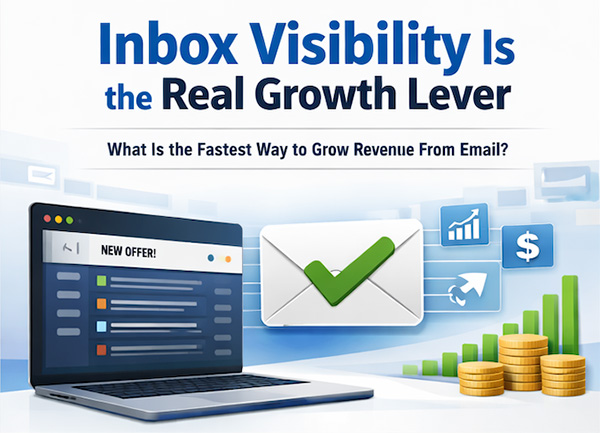
Inbox Visibility is the real growth lever

Inbox Visibility Is the Real Growth Lever

Direct Answer: What Is the Fastest Way to Grow Revenue From Email?

The fastest way to grow revenue from email is not more sends, better subject lines, or new offers.

It is increasing Inbox Visibility.

Inbox Visibility determines how consistently your engaged subscribers see and interact with your emails. When visibility improves, engagement rises. When engagement rises, revenue scales.

Gmail’s AI systems reward senders who generate consistent interaction. If you improve engagement patterns and sending behavior, you earn more exposure.

More exposure to the right audience is the real growth lever.

Why Most Businesses Try to Grow the Wrong Way

When revenue stalls, most businesses respond by:

  • Sending more frequently 
  • Pushing harder promotions 
  • Changing subject lines 
  • Blaming creative 
  • Launching new offers 
  • Increasing ad spend

These are surface-level adjustments.

But if fewer people are consistently seeing your emails, no tactical improvement will fix the underlying constraint.

Growth is constrained by visibility.

You cannot scale revenue if your audience is not consistently seeing you.

What Inbox Visibility Really Controls

Inbox Visibility impacts:

  • Open rates 
  • Click-through rates 
  • Conversion volume 
  • Offer performance 
  • Launch velocity 
  • List monetization efficiency

Even small improvements in visibility create compounding effects.

If your visibility improves by 10 percent and engagement remains stable, revenue can increase proportionally.

If visibility improves and engagement improves, growth accelerates.

Visibility is leverage.

How Gmail’s AI Creates Winners and Losers

Gmail’s AI systems analyze long-term engagement behavior to determine exposure levels.

They evaluate:

  • Click consistency over time 
  • Engagement ratio across active subscribers 
  • Frequency relative to engagement 
  • Historical interaction trends 
  • Sending stability

If engagement is consistent and rising, Gmail increases exposure.

If engagement is inconsistent or declining, Gmail reduces exposure.

This creates a quiet performance gap.

Two businesses can have similar lists, similar offers, similar copy.

The one with stronger engagement discipline earns more visibility.

More visibility means:

  • More clicks 
  • More conversions 
  • More revenue

The difference compounds over time.

The Compounding Effect of Visibility

Visibility compounds in three ways:

  1. Higher engagement improves AI confidence
  2. Improved AI confidence increases exposure
  3. Increased exposure generates more engagement

This creates a feedback loop.

If you manage engagement properly, you create upward momentum.

If you ignore engagement discipline, you create downward drift.

Most businesses are not collapsing.

They are drifting.

And drift destroys growth.

Why Scaling Send Volume Does Not Equal Scaling Revenue

Many operators believe growth equals volume.

More sends = more revenue.

That worked five years ago.

It does not work today.

If you increase volume without improving engagement, you train Gmail’s AI to lower your exposure.

Higher frequency without engagement discipline accelerates visibility decline.

Growth requires stronger signals, not louder noise.

Engagement Is Now a Competitive Asset

In today’s environment, engagement is not just a metric.

It is a strategic asset.

Mailbox providers reward:

  • Consistent interaction 
  • Clear behavioral signals 
  • Predictable engagement patterns

If you manage engagement like infrastructure, you gain competitive advantage.

If you treat engagement casually, you lose exposure to disciplined competitors.

The businesses that win in email today are not the loudest.

They are the most behaviorally consistent.

What High-Visibility Senders Do Differently

High-visibility senders:

  • Segment by recent engagement 
  • Suppress cold segments 
  • Adjust frequency based on interaction 
  • Model success on clicks, not opens 
  • Maintain stable sending patterns 
  • Warm new subscribers gradually 
  • Remove inactive contacts strategically

They understand something critical:

Visibility is earned daily.

It is not granted permanently.

How Visibility Drives Revenue Efficiency

When Inbox Visibility is strong:

  • Cost per acquisition decreases 
  • Revenue per subscriber increases 
  • Launch volatility decreases 
  • Evergreen sequences perform consistently 
  • Retention improves

This creates predictable revenue.

Predictability creates confidence.

Confidence allows scaling.

Scaling allows reinvestment.

Visibility fuels the entire cycle.

The Strategic Shift: From Deliverability to Visibility Management

Most companies still think in terms of deliverability.

Delivered or not delivered.

Spam or not spam.

This is outdated thinking.

The modern model is visibility management.

Visibility management includes:

  • Engagement discipline 
  • Sending behavior stability 
  • List hygiene enforcement  
  • Domain-level trust maintenance

The businesses that embrace this model outperform those chasing placement hacks.

Why Promotions Tab Obsession Misses the Point

Primary versus Promotions is not a growth strategy.

Visibility within your engaged audience is.

If subscribers consistently interact with your emails, Gmail rewards that behavior regardless of tab categorization.

If subscribers ignore your emails, visibility declines regardless of tab placement.

The real growth question is:

Are you consistently generating interaction?

Not:

Which tab are you in?

The Growth Formula

Revenue from email is driven by:

Engaged Subscribers x Inbox Visibility x Click Conversion Rate

Most businesses try to improve conversion rate.

Few focus on visibility.

But visibility multiplies everything else.

Even small gains in visibility produce measurable revenue growth.

Frequently Asked Questions

What is Inbox Visibility in email marketing?

Inbox Visibility is how consistently your engaged subscribers see and interact with your emails. It is determined by long-term engagement patterns rather than simple deliverability metrics.

How does improving Inbox Visibility increase revenue?

Improved visibility increases exposure to engaged subscribers. More exposure leads to more clicks, which leads to more conversions and revenue.

Does increasing send frequency improve visibility?

Not unless engagement supports it. Increasing volume without strong interaction signals can reduce visibility over time.

How does Gmail decide which senders grow?

Gmail’s AI evaluates long-term engagement trends. Senders who generate consistent interaction earn greater exposure.

Can two similar businesses experience different visibility outcomes?

Yes. The business with stronger engagement discipline and sending stability earns more visibility and therefore more revenue.

Final Word

Most businesses think growth is about sending more.

It is not.

Growth is about earning more visibility.

Inbox Visibility is the real growth lever.

Manage it intentionally.

Protect it aggressively.

Scale it strategically.

Because the business that earns more consistent exposure wins more consistent revenue.
Mar 12

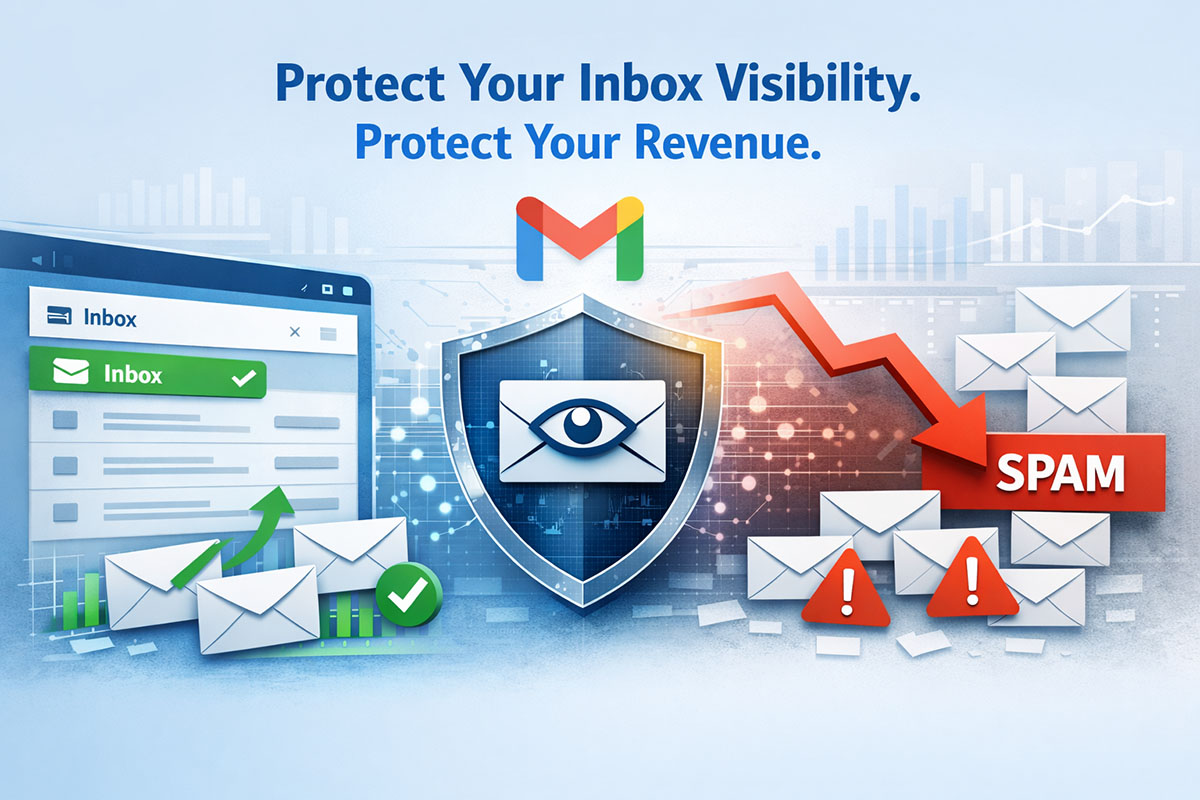
Protect Your Inbox Visibility. Protect Your Revenue.


Protect Your Inbox Visibility. Protect Your Revenue.

Protect Your Inbox Visibility. Protect Your Revenue.

Direct Answer: What Is Inbox Visibility and Why Does It Matter?

Inbox Visibility is how consistently your engaged subscribers actually see your emails in their inbox.

When Inbox Visibility declines, clicks drop. When clicks drop, revenue becomes unstable.

Gmail and other mailbox providers now use AI systems that study engagement behavior over time. If interaction patterns weaken, your visibility shrinks, even if traditional deliverability metrics look healthy.

If you want predictable revenue from email, you must protect Inbox Visibility.

What Is Inbox Visibility?

Inbox Visibility is not the same as deliverability.

Deliverability asks:

Did the message get accepted by the server?

Inbox Visibility asks:

Did real people consistently see and interact with it?

This is where most businesses get confused.

You can have:

  • 98 to 99 percent inbox placement

  • Passing SPF, DKIM, and DMARC

  • Low spam complaints

  • Clean bounce rates

And still experience:

  • Falling open rates

  • Lower click rates

  • Reduced revenue per send

Why?

Because Gmail does not reward "sent." It rewards "engaged."

Inbox Visibility is controlled by behavior.

How Does Gmail Decide Who Gets Seen?

Gmail does not simply decide whether to accept your email. It decides how much exposure you earn.

Its AI systems look at:

  • Whether subscribers consistently click over time

  • Whether engagement is rising or falling

  • How recently subscribers interacted

  • Whether engagement is stable across your list

  • Sending consistency and frequency patterns

  • Domain-level interaction history

In simple terms, Gmail predicts whether your email will be interacted with.

If it predicts low interaction, visibility shrinks. Not because you are being punished, but because Gmail is trying to protect the user experience.

Why High Inbox Placement Does Not Equal High Visibility

This is one of the biggest misunderstandings in email marketing.

You can land in the inbox and still lose visibility.

After Gmail accepts your email, it makes multiple visibility decisions:

  • How prominently it appears

  • How it is prioritized against other senders

  • Whether it is surfaced or quietly buried

Gmail's AI decides how much exposure you earn based on engagement behavior.

If interaction patterns decline, your emails become less prominent. That reduction can happen gradually.

And gradual erosion is more dangerous than spam placement because it is harder to detect.

What Causes Inbox Visibility to Decline?

The primary cause is engagement decay.

Engagement decay means fewer subscribers interacting over time.

This happens when:

  • You send to cold segments too long

  • You fail to segment by recent engagement

  • You increase frequency without strong engagement support

  • You rely on open rates instead of clicks

  • You keep inactive subscribers on active sends

When this happens, Gmail's systems see a pattern:

"This sender generates declining interaction."

That pattern reduces visibility across your entire list.

Not just for cold contacts.

For everyone.

Is the Promotions Tab the Real Problem?

No.

The Promotions tab is not spam. It is the inbox.

It is simply a categorization system.

You can generate strong revenue from Promotions. In fact, several recent studies show higher revenue generated from the Promotions tab than from placement in the Primary inbox.

What actually hurts revenue is declining visibility and declining interaction.

If subscribers consistently click your emails, you can thrive in Promotions.

If subscribers stop interacting, you lose visibility everywhere.

Obsessing over Primary placement is tactical thinking.

Protecting Inbox Visibility is strategic thinking.

What Is Reputation Decay?

Reputation decay is what happens when engagement patterns weaken over time.

It does not always trigger spam placement. Instead, it reduces how prominently your emails appear.

Less prominence leads to:

  • Fewer opens

  • Fewer clicks

  • Lower conversion rates

  • Unstable revenue

Reputation decay is invisible at first.

Revenue decline is usually the first clear signal.

Why Revenue Instability Is a Visibility Problem

Email revenue depends on:

  • Number of engaged subscribers

  • How consistently they see your emails

  • How often they click

  • Conversion effectiveness

If visibility declines by 15 percent and engagement drops another 10 percent, you can lose 20 to 30 percent of effective revenue without any obvious deliverability issue.

This is why many businesses say:

"Our content hasn't changed."

That may be true.

But the environment has.

Gmail now uses engagement-based prediction to decide exposure.

How Gmail's AI Actually Thinks

Gmail's systems look at long-term click engagement trends.

They evaluate:

  • Are subscribers still clicking consistently?

  • Is engagement steady or declining?

  • Are you sending beyond your engaged audience?

  • Has interaction momentum slowed?

Gmail predicts future behavior based on past interaction.

If future interaction looks weak, visibility shrinks.

This is behavior-based prediction.

And your sending patterns train the system every day.

How to Protect Inbox Visibility

Protecting Inbox Visibility requires discipline, not hacks.

Here is what works:

  • Tight engagement segmentation

  • Suppressing cold segments from regular sends

  • Monitoring how quickly engagement is rising or falling

  • Modeling success based on clicks, not opens

  • Gradually warming new subscribers

  • Maintaining consistent sending behavior

  • Removing inactive contacts when necessary

Inbox Visibility must be earned and maintained.

It is not a switch you flip.

It is an asset you protect.

Frequently Asked Questions

What is Inbox Visibility in email marketing?

Inbox Visibility is how consistently your engaged subscribers actually see your emails in their inbox. It is determined by engagement behavior over time, not just technical deliverability.

Why are my emails underperforming even though they are delivered?

Because mailbox providers prioritize engagement. If interaction patterns decline, visibility shrinks even when emails are technically delivered.

Does the Gmail Promotions tab reduce revenue?

No. Revenue is reduced when engagement declines. Promotions categorization does not automatically mean lower performance.

What causes reputation decay?

Sending to inactive subscribers, failing to segment by engagement, increasing frequency without strong interaction, and ignoring click-based engagement signals.

How does Gmail decide which emails get more visibility?

Gmail uses AI systems that analyze long-term engagement behavior. Senders with consistent interaction earn more visibility.

Final Word

Deliverability is a technical term.

Reputation is the mechanism.

Inbox Visibility is the outcome.

And revenue follows the outcome.

If fewer people are seeing your emails today than six months ago, the issue is not cosmetic.

It is structural.

Protect your Inbox Visibility. Protect your revenue.

>